I research and test everything I recommend. As an Amazon Associate, I earn a small commission on purchases through my links. Your price stays the same, and I get to buy more tea books. Win-win.
Have you noticed what's happened to coffee? Third wave. Single origin. Tasting notes. Obsessive attention to every detail of the process. It wasn't really like that, 15 years ago.
Tea has all of that. It's just that most of the western world hasn't caught on yet. I've been getting obsessed for a while in the world of craft tea, and I'm excited to tell you about it.
If you want to do a deeper dive on classy tea, start below:
Blog: How Craft Tea Compares With Craft Coffee
So, where does tea come from?
The history of tea goes back to China, around 2737 BC. Legend credits Emperor Shen Nong, who was boiling water outside when dried leaves from a nearby tree blew into his pot. He tried it. He liked it. That tree was Camellia sinensis, and every real cup of tea on earth still comes from it.
By the Tang Dynasty, tea had become serious business. A man named Lu Yu wrote Cha Jing, the Classic of Tea, covering everything from how to grow and harvest it to the philosophy behind the whole practice. He basically argued that tea deserved to be taken seriously. People listened. He was the first OG tea sensei.
Tea made its way to Japan in the 9th century, carried by Buddhist monks studying in China. Japan built something extraordinary from it. Chado. The Way of Tea. A ceremony of presence and hospitality still practiced today. I hope to someday experience a real life one in Japan.
But honestly, I just want to give you an introduction to two of my favorite books to go for. I have LOVED these and would recommend diving in.
Book Recs for Tea
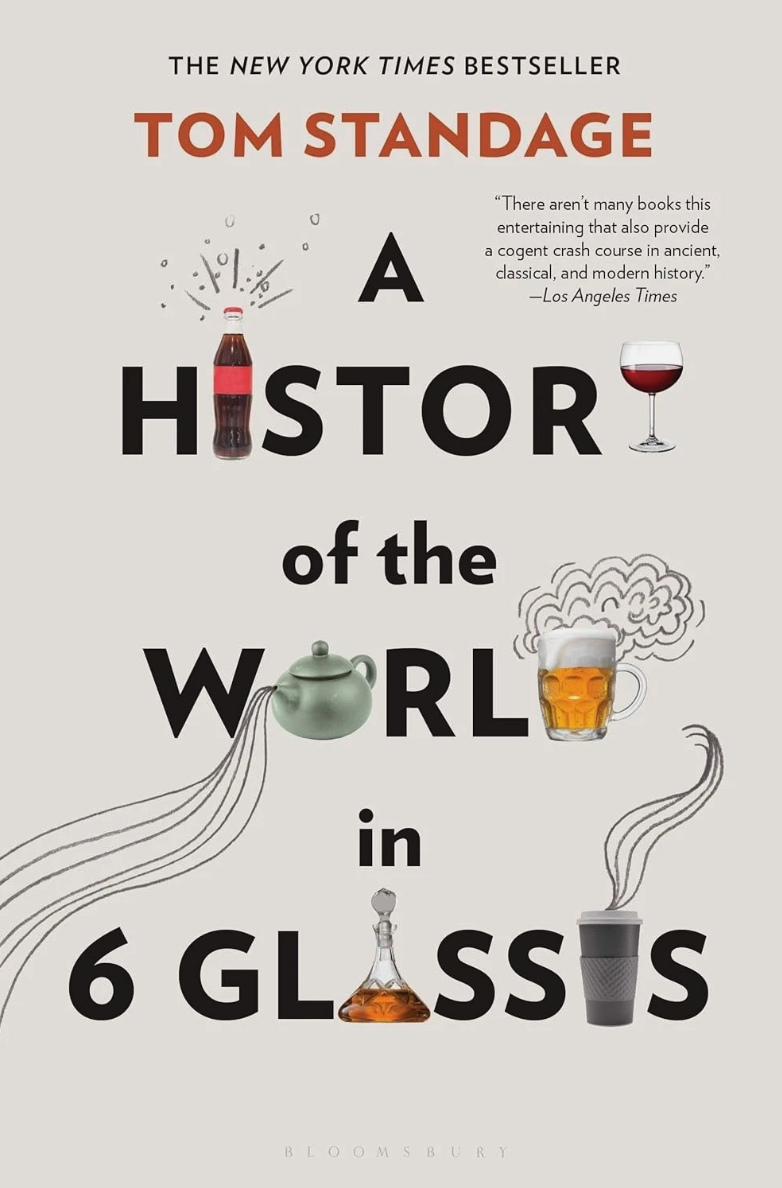
A History of the World in 6 Glasses by Tom Standage
Check price on Amazon
I first came across this book at around eighteen and have loved it since. Standage argues that six drinks (beer, wine, spirits, coffee, tea, and Coca-Cola) each shaped a distinct era of civilization.
The tea section covers the British Empire, the Opium Wars, and the Boston Tea Party. You close it understanding history differently than when you opened it.
It's a genuine page-turner, and it'll make you want to brew whatever drink the chapter is about. But the Tea portion of the book is riveting. I was tasked to teach on Tea at a dinner party in 2015, and used this as my guide. It was great. I even got paid for it.
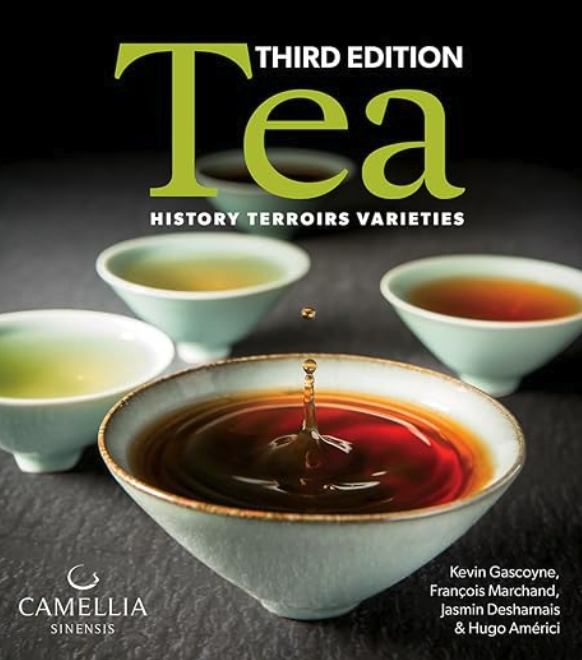
Tea: History, Terroirs, Varieties
Check price on Amazon
This one is a different kind of book entirely. Where Standage gives you the big picture, this goes close-up. Tea fields in Darjeeling. Processing floors in Fujian. Tea masters in Taiwan.
The photography alone is worth it.
It also goes deep into terroir: elevation, soil, climate, how all of it ends up in the cup. If you've ever wondered why a Wuyi rock oolong tastes like it does, this is your book.
One of the most gorgeous books and perfect for a coffee table (might have to become a tea table).
I wrote a full review of this one, including how it taught me tea while I was living in Boulder: Blog: Tea: History, Terroirs, Varieties Review.
I'm not a tea historian. I just find this stuff genuinely fascinating and I'm still learning.
Grab one of these, brew something good, and let me know what you think.