I research and test everything I recommend. As an Amazon Associate, I earn a small commission on purchases through my links. Your price stays the same, and I get to buy more good tea. Win-win.
Short answer: the best water filter for tea is one that removes chlorine and odd tastes but keeps some minerals. I've used Brita pitchers plenty, but honestly, the best water I've had for tea comes from an under-sink filter. That's what we use in our house in Canada, and nothing else has come close. A Brita Elite pitcher is a great cheaper start. Reverse osmosis is powerful, but it strips so much out that tea can taste flat unless you add minerals back.
A cup of tea is about 99% water. You can buy great leaves and nail the temperature, and still end up with a dull cup because of what's coming out of your tap. I've made tea in places where I poured the whole cup out because the water was so bad it wasn't worth drinking. That's a waste of good tea. Here's what's going on and what to do about it.
Why Water Matters So Much for Tea
Three things in your water change the cup:
- Chlorine and chloramine. Cities add these to keep water safe. You can taste them in tea as a flat, slightly pool-like note that covers delicate flavors. This is the easiest problem to fix.
- Hardness (calcium and magnesium). A little is good. It gives tea body. A lot dulls flavor, makes black tea cloudy, and leaves that oily-looking film on top. It also crusts up the inside of your kettle, and I can tell you from experience that a crusty kettle makes for a yucky cup of tea.
- Too few minerals. The opposite problem. Distilled and reverse osmosis water have almost nothing in them, and tea brewed with them tastes thin and hollow.
The sweet spot is clean, soft-to-moderate water. A common target is roughly 50 to 150 ppm of total dissolved solids (TDS). You don't need to be exact. Getting rid of chlorine and taking the edge off very hard water covers most of it.
First, Find Out What You're Working With
Taste your tap water cold, side by side with a bottle of spring water. If you notice chlorine, a carbon filter will make a big difference. If your kettle has white crust inside, your water is hard.
If you want a number, a TDS meter tells you how much is dissolved in your water. Conveniently, the ZeroWater pitcher below comes with one.
The Best Water Filters for Tea
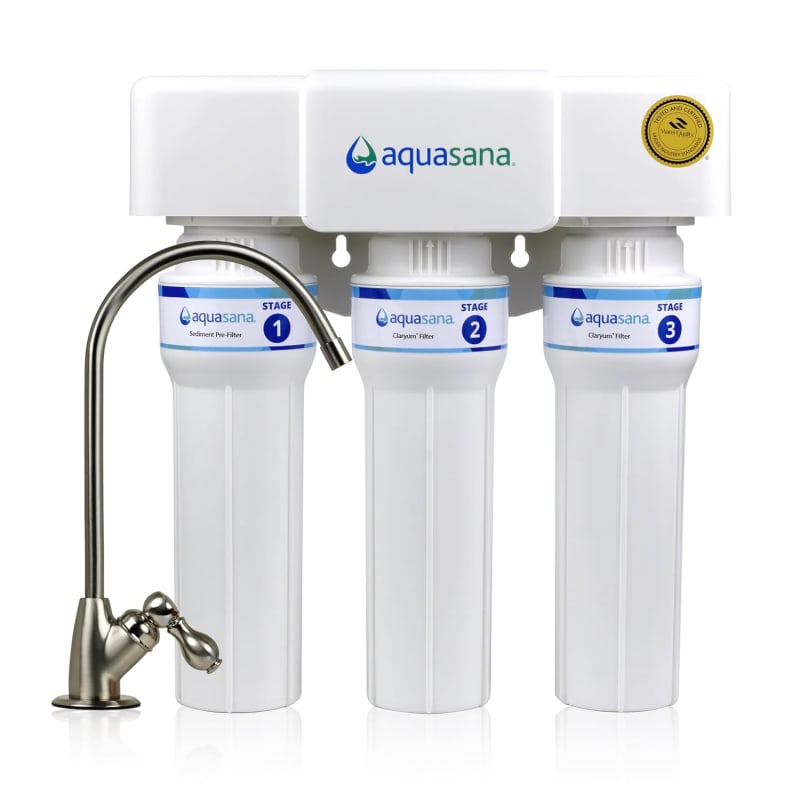
1. Aquasana Claryum Under-Sink: Best Overall
Price range: about $400 to $460. Check for current prices.
This is the kind of filter I'd tell any tea lover to get, because an under-sink filter is what we use at our house in Canada and it's been the best by far. You get filtered water from a faucet on demand, no pitcher to refill. The Claryum 3-stage is certified to NSF standards 42, 53 and 401, and it's designed to keep beneficial minerals rather than strip them. That's exactly what you want for tea.
It's the one I'd pair with an instant hot water dispenser, too. You can find it here. If you don't want a separate faucet, Aquasana also makes a direct-connect version that filters your main kitchen tap, usually about $100 to $140.
2. Brita Elite Pitcher: Best Place to Start

Price range: about $35 to $50. Check for current prices.
If you're not ready for an under-sink filter, start here. I've used Brita pitchers a lot over the years. The Elite filter is a carbon filter certified to reduce chlorine, lead and a long list of other contaminants, and it leaves most of the minerals in place, so your tea keeps its body. Each filter lasts about six months.
Fill it at night, and you'll have cold filtered water ready for the kettle in the morning. Check price on Amazon. Replacement filters run about $25 to $35 for a two-pack, and you can check current prices here.
3. ZeroWater Pitcher: Best for Testing (and Very Hard Water)

Price range: about $30 to $45. Check for current prices.
ZeroWater's ion exchange filter removes nearly all dissolved solids, and the pitcher comes with a TDS meter so you can see the numbers. That's both its strength and its weakness for tea.
On its own, ZeroWater water is too pure and tea tastes flat. Where it shines: test your tap water with the meter, and if it's very hard, blend ZeroWater with tap or Brita water to land in that 50 to 150 ppm range. Check price on Amazon.
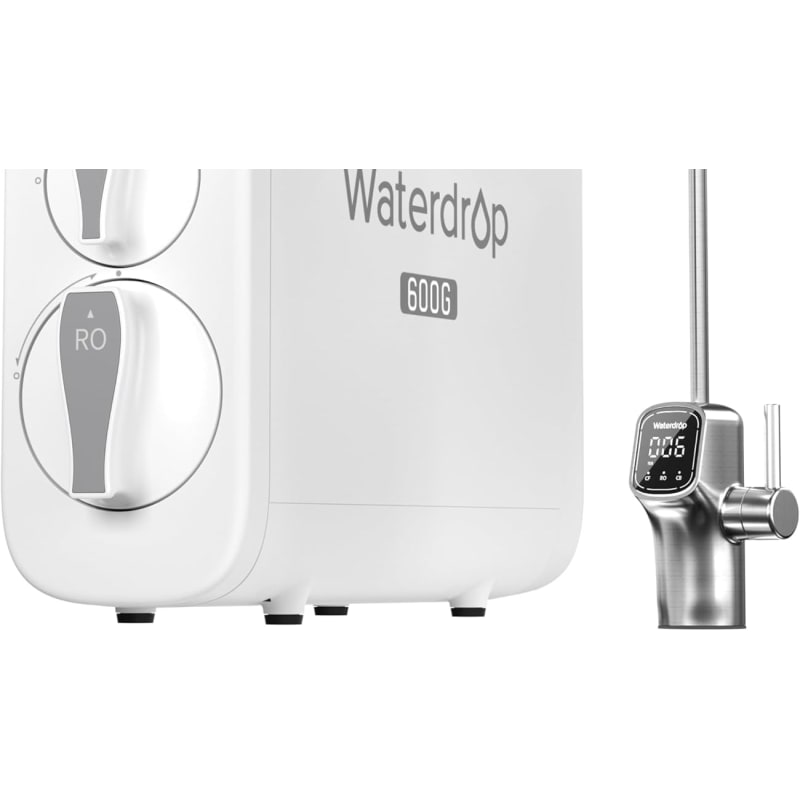
4. Waterdrop G3P600 Reverse Osmosis: Best for Problem Water
Price range: about $400 to $450. Check for current prices.
If your water is very hard, has contaminants you're worried about, or just tastes bad no matter what, reverse osmosis is the strongest fix. The G3P600 is a popular tankless system with an 8-stage filter and a smart faucet that shows the water's TDS.
The tea caveat: RO water is very low in minerals. For the best cup, mix it with some filtered tap water or add a mineral packet. Check price on Amazon.
5. Waterdrop KJ600: Best Filter and Instant Hot Water in One
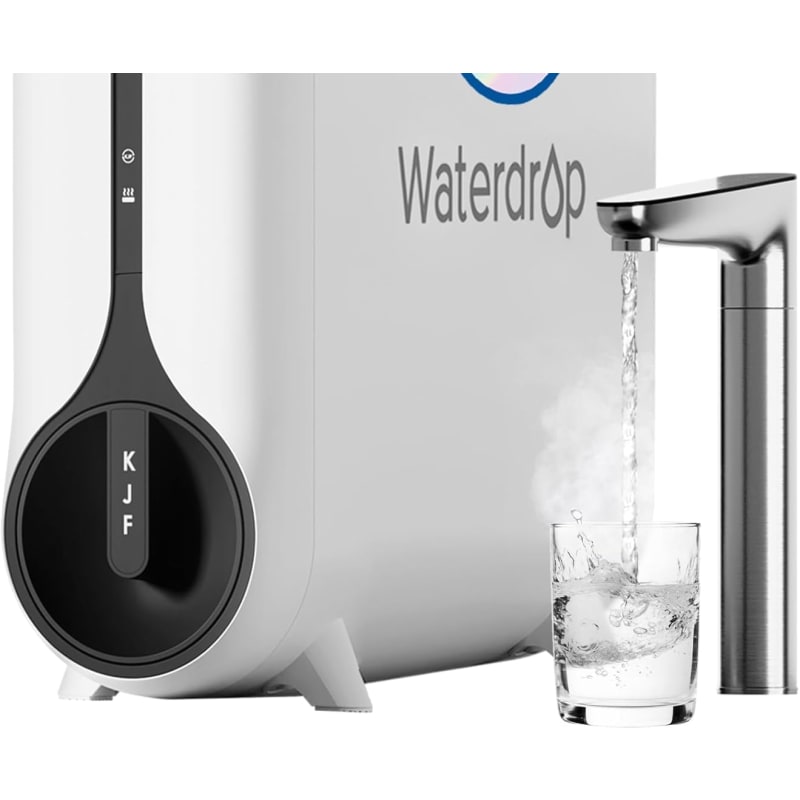
Price range: about $500 to $600. Check for current prices.
This one combines reverse osmosis with instant hot water at a temperature you choose. It's the cleanest single setup for a serious tea kitchen with hard water, with the same mineral caveat as above. You can find it here. I compared it with the classic under-sink options in Blog: Best Instant Hot Water Dispenser for Tea.
What About Bottled Water?
Bottled spring water with a low mineral content makes excellent tea, and it's a great way to taste what your tea is supposed to taste like. Avoid distilled water, which is too flat, and very high-mineral waters, which make tea taste dull. Bottled water gets expensive and wasteful fast, though, so I'd treat it as a test, then match it with a filter.
Simple Water Habits for Better Tea
If you're brewing with a gaiwan, water quality shows up even more, since you're tasting the same leaves round after round. My kettle picks for that are in Blog: Ideal Electric Kettles for Gong Fu Cha.
Quick Questions
What is the best water for tea?
Fresh, cold water that's free of chlorine and has a modest amount of minerals. Filtered tap water or a low-mineral spring water works great. Distilled and reverse osmosis water usually taste flat.
Is reverse osmosis water good for tea?
On its own, usually not. Reverse osmosis removes almost all minerals, and tea brewed with it tends to taste thin and flat. It helps a lot if your tap water is very hard or contaminated, especially if you add minerals back or blend it with filtered tap water.
Why does my tea have a film on top?
That film is usually hard water. Calcium carbonate in the water reacts with compounds in the tea, especially black tea, and leaves a cloudy skin on the surface. A filter that softens the water a bit, or a squeeze of lemon, helps.
Is Brita water good for tea?
Yes. A carbon pitcher like Brita removes chlorine, which is the most common thing that makes tap water taste off in tea, while leaving most minerals in place.
Homework: brew the same tea twice tonight, once with tap water and once with filtered or spring water. Taste them side by side. That one experiment will tell you whether a filter is worth it for you.