---
title: "How to Make Iced Tea with Loose Leaf: Flash-Chilled or Big-Batch"
description: "How to make iced tea with loose leaf tea: my tea house flash-chill method (bright, never cloudy, ready in minutes), plus an easy big-batch pitcher."
image: https://res.cloudinary.com/cekiuehr/image/upload/e_upscale/c_fill,ar_16:9,g_auto,w_1200/f_auto,q_auto/blog/featured/how-to-make-iced-tea-with-loose-leaf-tea
---
[Josh Caliguire](https://www.joshcaliguire.com/?hsLang=en)
[Blog](https://www.joshcaliguire.com/blog) [Tea](https://www.joshcaliguire.com/blog) [Friendship](https://www.joshcaliguire.com/blog) [About](https://www.joshcaliguire.com/about?hsLang=en)
[Subscribe](https://www.joshcaliguire.com/contact#newsletter)
Tea
# How to Make Iced Tea with Loose Leaf Tea: Flash-Chilled and Big-Batch Methods
Josh Caliguire · May 29, 2026

*I research and test everything I recommend. As an Amazon Associate, I earn a small commission on purchases through my links. Your price stays the same, and I get to buy good tea. Win-win.*
Making iced tea with tea bags is pretty self-explanatory. Steep, cool, done. Loose leaf is a little more involved, but once you know what you're doing it's just as fast and the result is noticeably better.
I used to work at a tea house where we served over 200 loose leaf teas and made iced tea out of every single one of them. These are the two methods I still use today.
The first is flash chilling, also called flash brewing: brew hot and strong, pour over ice, done in minutes. The second is a big-batch method for when you want a full pitcher in the fridge.
Ratios at a glance: for flash chilling, use about twice the leaf you'd use for a hot cup (roughly 2 teaspoons, or 4 to 5 grams, for a tall glass) and half the water. For a pitcher you'll pour over ice, use about 1 teaspoon (2 to 3 grams) per cup of water, a little more if you like it strong.
Why not cold brew? Cold brew works, but it takes hours and tastes softer. Flash chilling is fast and keeps the aroma and flavor bright.
Cold brew really shines with yerba mate, though: [Blog: Cold Brew Yerba Mate: Ratio, Steep Time & Gear That Works](https://www.joshcaliguire.com/blog/how-to-cold-brew-yerba-mate-ratio-time-and-the-gear-that-works?hsLang=en).
**Flash-Chilled Iced Tea (Hot Brew Over Ice)**
This one is ideal when you're making one drink for yourself or serving a few friends and you want each cup to be fresh and perfectly balanced. Just make sure you have more ice than a few cubes... like I didn't yesterday. Oops.
Fill your cup or glass nearly to the top with ice.
Then brew a strong concentrate of whatever tea you want: a generous amount of loose leaf and just enough water to cover it, maybe a touch more. Two minutes is plenty. Then strain it directly over the ice.
The logic is simple. The concentrate is hot and strong, but there's not much of it. As it hits the ice, the small amount of hot water melts just enough to dilute and chill it, and the remaining ice holds everything cold. You end up with a perfectly balanced cup that still has ice, and a perfect strength and color.
You can do this with a regular teapot and strainer, but my favorite way is with a kitchen grade gravity tea dispenser: a wide-opening brewer with a fine filter at the bottom and a latch mechanism that only opens when you set it on top of a cup or thermos.
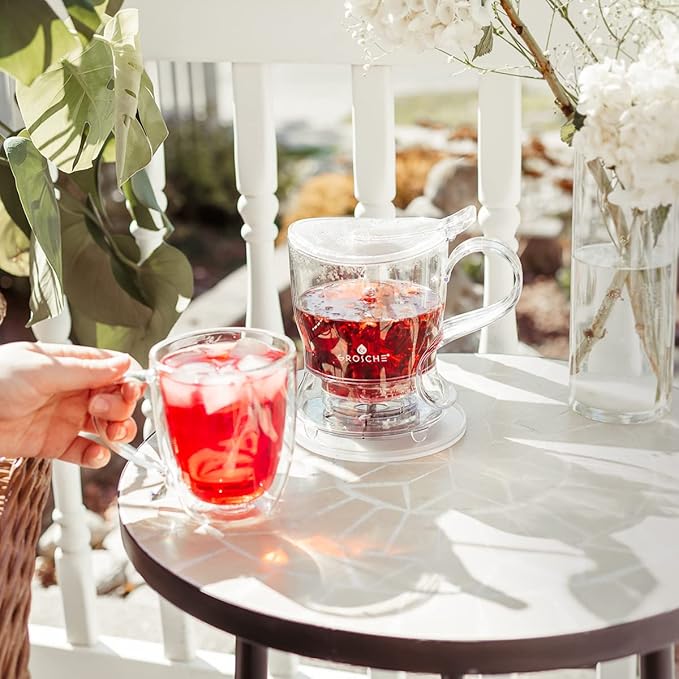
You load in your leaves and hot water, let it steep, and then place it directly over your ice-filled glass. The latch releases and the tea flows down through the filter, leaving all the leaves behind. EASY TO CLEAN, THANK GOD.
It's genuinely beautiful to watch, especially with teas that bloom and expand as they steep. A milky oolong over ice this way is something else. I used these dispensers at the tea house and still reach for mine constantly. They're inexpensive, easy to clean, and never fail to impress someone who hasn't seen one before.
[Here's the gravity tea infuser I use.](https://www.amazon.com/dp/B016MZ2OIW?tag=joshcaliguire-20)
**Big-Batch Iced Tea for a Pitcher**
When you want a full pitcher or jug ready in the fridge, you need a different approach.
The key with loose leaf is that you want the leaves to have room to move during brewing. A few options work well here.
A large electric kettle is the most straightforward. The [Breville variable temp kettle](https://www.amazon.com/dp/B00M2OI2KC?tag=joshcaliguire-20) boils a serious amount of water fast, which is ideal when you're making a big batch. Steep the leaves right in the kettle or transfer to a large vessel once it's boiled. More on my top picks: [Blog: Ideal Electric Kettles for Tea](https://www.joshcaliguire.com/blog/ideal-electric-kettles-for-tea-2026-edition?hsLang=en).
If you want something you can steep and store in the same container, a large French press is excellent for this. The [Stanley French press](https://www.amazon.com/dp/B07L6LQHB4?tag=joshcaliguire-20) is the one I'd point you toward if capacity is what you're after. Press, strain, done.
The one I've been experimenting with lately is the coffee pot. If yours has been recently cleaned, it works surprisingly well: add your loose leaf directly to the empty carafe or the basket area, load the water reservoir as usual, and hit start. The machine does the brewing for you.
One important caveat: I'd only use this method with teas that don't turn bitter from extended heat or a bit of over-steeping. Mint, rooibos, hibiscus, fruit blends, most herbal and flavored teas work great.
Skip this method for anything that's straight *Camellia sinensis*, meaning green, black, or oolong teas, which can get astringent fast. You can always sweeten to combat bitterness, but that's up to you. For real tea, try to not steep over 8 minutes, even when doing bulk... unless you're adding sweetener.
Why does that happen? [Blog: Why Is My Tea Bitter? It's Time and Temperature](https://www.joshcaliguire.com/blog/time-and-temperature?hsLang=en).
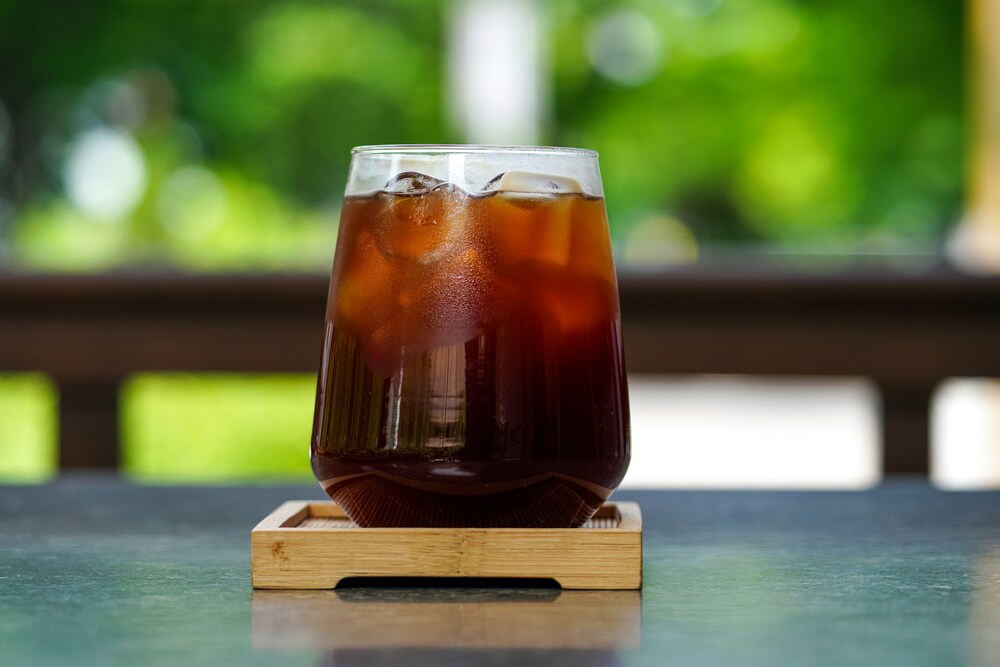
Once it's brewed, let it cool slightly, then pour it through a fine mesh strainer into your final jug or pitcher. A simple kitchen strainer does the job.
[Find a fine mesh kitchen strainer](https://www.amazon.com/dp/B00004OCLX?tag=joshcaliguire-20)
Let it sit in the fridge overnight. By morning you have a big batch of cold, clean, properly brewed iced tea ready to go.
## Quick Questions
**Why is my iced tea cloudy?**
Cloudiness happens when strong, hot tea cools slowly, especially in the fridge. The tannins and caffeine clump together as it cools. Flash chilling avoids it because the tea goes from hot to cold in seconds. For a pitcher, let it cool to room temperature before it goes in the fridge.
**How long does homemade iced tea last?**
Keep it in the fridge and drink it within two to three days. After that the flavor fades and it starts to taste flat.
**What are the best loose leaf teas for iced tea?**
Black teas, oolongs (milky oolong is a favorite), hibiscus, mint and rooibos all shine over ice. If you want to try a range before buying a full bag, start with [Blog: Best Loose Leaf Tea Samplers](https://www.joshcaliguire.com/blog/best-loose-leaf-tea-samplers?hsLang=en).
**Making iced tea for a cafe or restaurant?**
At that volume, a dedicated brewer is worth it. My picks: [Blog: Best Commercial Iced Tea Brewer for Cafes](https://www.joshcaliguire.com/blog/best-commercial-iced-tea-brewer?hsLang=en).
Iced tea season never ends, and if you've been standing in the grocery store aisle squinting at ingredient lists trying to find a bottled iced tea that doesn't have added sugar or artificial flavoring, I understand the frustration.
There is a lot of incredible loose leaf tea out there, and making it at home costs a fraction of what you'd spend on bottles. Flash chilling and the big-batch method are where I'd start.
If you're interested in learning more techniques for making loose leaf tea, [here's the more ancient way: *Gong Fu Cha* ceremonies.](https://www.joshcaliguire.com/blog/gong-fu-cha-the-chinese-tea-ceremony-that-will-slow-you-down?hsLang=en)
Or if you're looking to do some high tech brewing with your coffee equipment, [check out AeroPressing tea.](https://www.joshcaliguire.com/blog/tea-aeropress?hsLang=en)

About Josh Caliguire
Writer, friend, and community builder splitting time between Mazatlán, Boulder, and Alberta. I write about tea, friendship, and the deliberate small choices that make life richer.
[Subscribe to the newsletter →](https://www.joshcaliguire.com/contact#newsletter)
Keep Reading
## More from the blog
[](https://www.joshcaliguire.com/blog/best-instant-hot-water-dispenser-for-tea?hsLang=en)
Tea
### [Best Instant Hot Water Dispenser for Tea in 2026: Under-Sink, Boiling Taps and Countertop Picks](https://www.joshcaliguire.com/blog/best-instant-hot-water-dispenser-for-tea?hsLang=en)
The best instant hot water dispenser for tea depends on how hot it gets. Under-sink, boiling tap and countertop picks, matched to green, oolong and black tea.
[](https://www.joshcaliguire.com/blog/gifts-for-yerba-mate-lovers?hsLang=en)
Yerba Mate
### [Gifts for Yerba Mate Lovers: 10 Mate Gifts They'll Use Every Day (2026)](https://www.joshcaliguire.com/blog/gifts-for-yerba-mate-lovers?hsLang=en)
The best gifts for yerba mate lovers: gourds, thermoses, mate kits, matero bags and yerba to fill them. 10 picks, from stocking stuffers to splurges.
[](https://www.joshcaliguire.com/blog/gifts-for-matcha-lovers?hsLang=en)
Tea
### [Gifts for Matcha Lovers: 12 Matcha Gifts They'll Use Every Morning (2026)](https://www.joshcaliguire.com/blog/gifts-for-matcha-lovers?hsLang=en)
The best gifts for matcha lovers, from a $20 whisk set to the kettle I'd splurge on. 12 matcha gifts for beginners, latte fans and ceremony nerds.
## Pull Up a Chair
Get my best notes on tea, yerba mate, and friendship in your inbox. No spam, unsubscribe anytime.
Josh Caliguire
Writer, tea lover, and community builder. Exploring friendship, intentional living, and the best cup of the day.
Explore
- [Blog](https://www.joshcaliguire.com/blog?hsLang=en)
- [Tea](https://www.joshcaliguire.com/blog/tag/tea?hsLang=en)
- [Yerba Mate](https://www.joshcaliguire.com/blog/tag/yerba-mate?hsLang=en)
- [Friendship](https://www.joshcaliguire.com/blog/tag/friendship?hsLang=en)
- [About](https://www.joshcaliguire.com/about?hsLang=en)
- [Contact](https://www.joshcaliguire.com/contact?hsLang=en)
Partners
© 2026 Josh Caliguire. Powered by tea, friendship, and midnight oreos and milk.
```json
{
"@context" : "https://schema.org",
"@type" : "BlogPosting",
"author" : {
"@type" : "Person",
"name" : "Josh Caliguire",
"url" : "https://www.joshcaliguire.com/blog/author/josh-caliguire"
},
"dateModified" : "2026-07-31T05:18:35.429Z",
"datePublished" : "2026-05-29T05:40:25.000Z",
"headline" : "How to Make Iced Tea with Loose Leaf: Flash-Chilled or Big-Batch",
"image" : [ "https://res.cloudinary.com/cekiuehr/image/upload/e_upscale/c_fill,ar_16:9,g_auto,w_1200/f_auto,q_auto/blog/featured/how-to-make-iced-tea-with-loose-leaf-tea" ],
"mainEntityOfPage" : {
"@id" : "https://www.joshcaliguire.com/blog/how-to-make-iced-tea-with-loose-leaf-tea",
"@type" : "WebPage"
},
"publisher" : {
"@type" : "Organization",
"logo" : {
"@type" : "ImageObject",
"url" : "https://www.joshcaliguire.com/hubfs/josh_caliguire_logo_v4.svg"
}
}
}
```
```json
{
"@context" : "https://schema.org",
"@type" : "BlogPosting",
"about" : [ {
"@type" : "Thing",
"name" : "Loose Leaf Tea"
}, {
"@type" : "Thing",
"name" : "Iced Tea"
}, {
"@type" : "Thing",
"name" : "Tea Brewing"
} ],
"articleSection" : "Tea",
"author" : {
"@type" : "Person",
"name" : "Josh Caliguire",
"url" : "https://www.joshcaliguire.com/about"
},
"dateModified" : "2026-10-12",
"datePublished" : "2026-05-29",
"description" : "Making iced tea with loose leaf doesn't have to be complicated. Here are two methods I learned working at a tea house with 200+ loose leaf teas: one fast, one in bulk.",
"headline" : "How to Make Iced Tea with Loose Leaf Tea: Flash-Chilled and Big-Batch Methods",
"image" : {
"@type" : "ImageObject",
"height" : 532,
"url" : "https://www.joshcaliguire.com/hubfs/yoanna-yordanova-aCAvdAkD_iY-unsplash-1.jpg",
"width" : 800
},
"isPartOf" : {
"@type" : "Blog",
"name" : "Josh Caliguire Blog",
"url" : "https://www.joshcaliguire.com/blog"
},
"keywords" : [ "how to make iced tea with loose leaf tea", "loose leaf iced tea", "iced tea loose leaf", "loose leaf tea iced tea", "how to brew iced tea", "iced tea without tea bags", "loose leaf tea brewing methods", "cup by cup iced tea method", "iced tea concentrate method", "bulk iced tea brewing", "gravity tea infuser", "gravity tea dispenser", "tea infuser for iced tea", "loose leaf tea strainer", "how to strain loose leaf tea", "iced tea recipe loose leaf", "homemade iced tea", "no sugar iced tea", "iced tea without sugar", "summer iced tea", "milky oolong iced tea", "oolong iced tea", "iced herbal tea", "iced mint tea loose leaf", "iced rooibos tea", "hibiscus iced tea", "French press iced tea", "Stanley French press tea", "Breville kettle iced tea", "coffee pot tea brewing", "Camellia sinensis iced tea", "loose leaf tea cold brew", "tea house iced tea method", "tea concentrate over ice", "best way to make iced tea at home", "loose leaf tea for beginners", "iced tea from scratch", "how to make iced tea fast", "making iced tea in bulk", "loose leaf tea pitcher", "iced tea jug", "tea bag vs loose leaf iced tea", "loose leaf tea tips", "steeping loose leaf tea for iced tea" ],
"mainEntityOfPage" : {
"@id" : "https://www.joshcaliguire.com/blog/how-to-make-iced-tea-with-loose-leaf-tea",
"@type" : "WebPage"
},
"publisher" : {
"@type" : "Organization",
"logo" : {
"@type" : "ImageObject",
"url" : "https://www.joshcaliguire.com/hubfs/C-6-1.jpeg"
},
"name" : "Josh Caliguire",
"url" : "https://www.joshcaliguire.com"
},
"url" : "https://www.joshcaliguire.com/blog/how-to-make-iced-tea-with-loose-leaf-tea"
}
```