I research and test everything I recommend. As an Amazon Associate, I earn a small commission on purchases through my links. Your price stays the same, and I get to buy more old tea books. Win-win.
The best tea quotes come from people who actually sat with a cup and paid attention: a Japanese art critic in 1906, a Tang dynasty poet, Henry James, Lewis Carroll, and Samuel Johnson, who called himself a "shameless tea drinker." Below are 25 of my favorites, grouped by where they came from.
Here's what makes this list different. I checked every quote against its original text wherever the book is in the public domain, and I gave each one its real source and year. A lot of tea quotes floating around the internet are misquoted or pinned on the wrong person. A few of the popular ones that don't hold up are at the bottom.
One more thing: on my Pinterest, the Okakura quotes get more saves than anything else I post. So we'll start there.
Tea Quotes From The Book of Tea (Okakura Kakuzo)
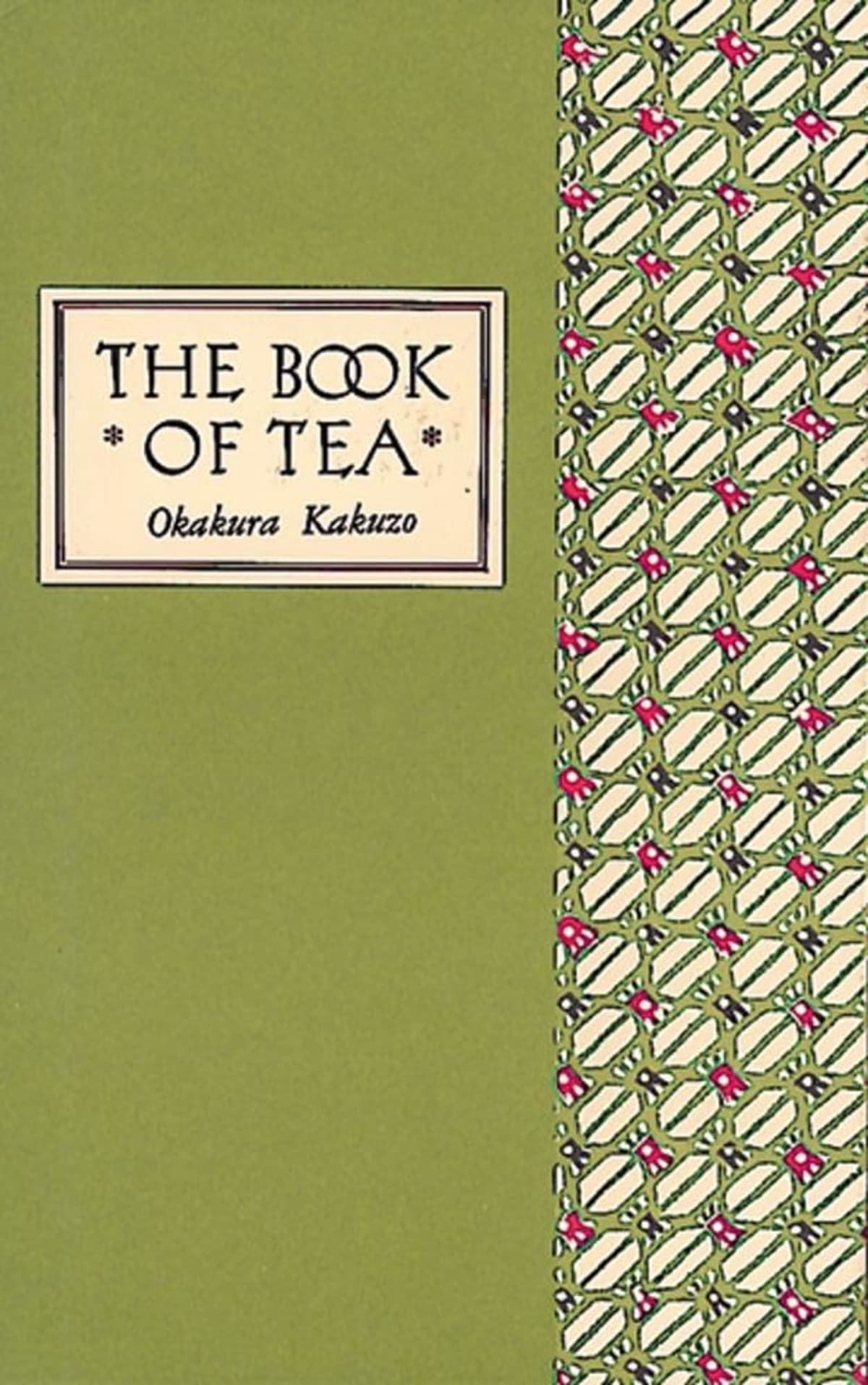
Okakura Kakuzo wrote The Book of Tea in English in 1906 to explain Japanese tea culture to Western readers. It's short, around 100 pages, and almost every page has a line worth underlining. If you only read one tea book in your life, make it this one. I like the Tuttle Classic Edition hardcover, which is small enough to keep next to the kettle.
1. "Tea began as a medicine and grew into a beverage."
Okakura Kakuzo, The Book of Tea (1906).
The very first line of the book, and the shortest history of tea ever written.
2. "Teaism is a cult founded on the adoration of the beautiful among the sordid facts of everyday existence."
Okakura Kakuzo, The Book of Tea (1906).
"Teaism" is his word for the philosophy behind the Japanese tea ceremony: finding beauty in ordinary, messy life.
3. "It is essentially a worship of the Imperfect, as it is a tender attempt to accomplish something possible in this impossible thing we know as life."
Okakura Kakuzo, The Book of Tea (1906).
This is the heart of wabi-sabi, and it's why a slow, imperfect Gong Fu Cha session can feel so good. (More on that in Blog: Gong Fu Cha: The Chinese Tea Ceremony That Will Slow You Down.)
4. "It shows comfort in simplicity rather than in the complex and costly."
Okakura Kakuzo, The Book of Tea (1906).
Good tea has never needed expensive gear. I wrote a whole post on that idea: Blog: Tea Setup Under $50: Kettle, Teapot & Mug.
5. "Those who cannot feel the littleness of great things in themselves are apt to overlook the greatness of little things in others."
Okakura Kakuzo, The Book of Tea (1906).
Probably the most shared line from the book, and it's about people more than tea.
6. "Tea is a work of art and needs a master hand to bring out its noblest qualities."
Okakura Kakuzo, The Book of Tea (1906).
The opening of his chapter on the schools of tea. The "master hand" mostly comes down to water temperature and steep time, which is easier than it sounds (Blog: Why is My Tea Bitter? It's Time and Temperature. Let's Fix It.).
7. "The art of life lies in a constant readjustment to our surroundings."
Okakura Kakuzo, The Book of Tea (1906).
From his chapter on Taoism and Zen, the two roots of the tea ceremony.
8. "Meanwhile, let us have a sip of tea. The afternoon glow is brightening the bamboos, the fountains are bubbling with delight, the soughing of the pines is heard in our kettle."
Okakura Kakuzo, The Book of Tea (1906).
He says this right after a heavy passage about East and West misunderstanding each other. When the world feels like too much, have a sip of tea. Still good advice.
Tea Quotes From Ancient China and Japan
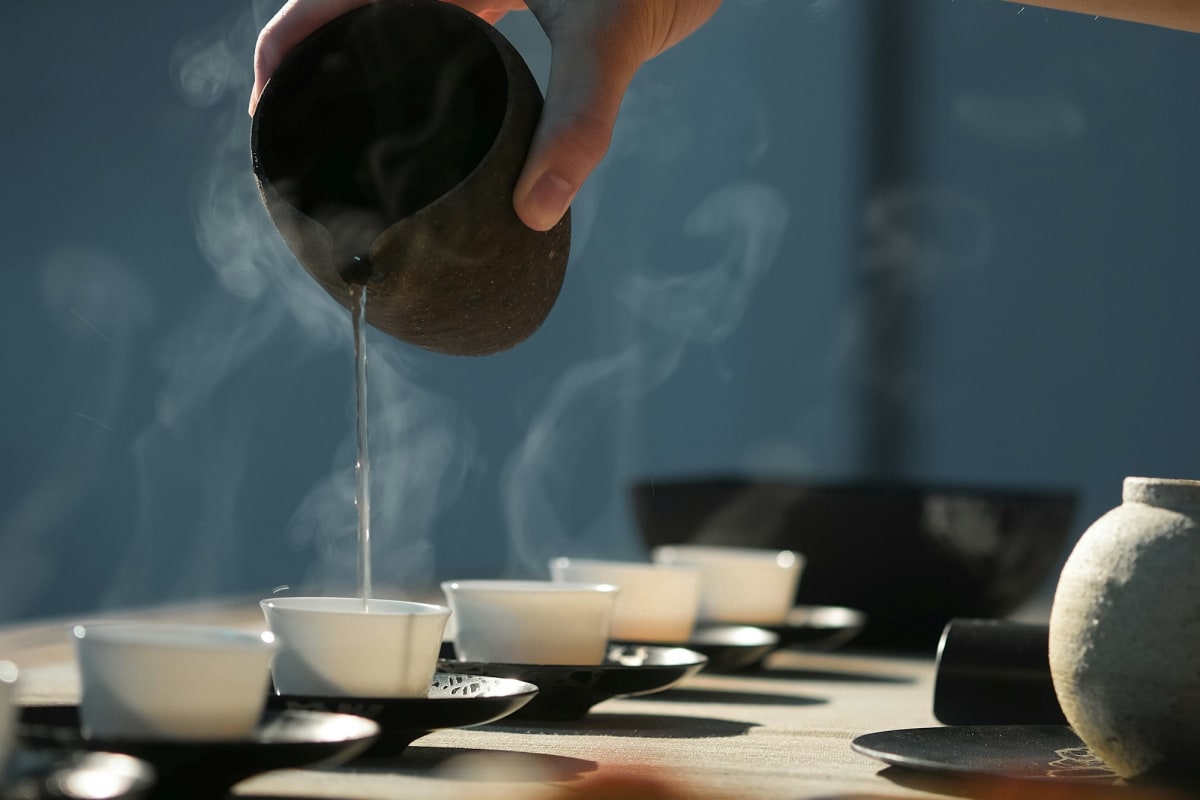
People were writing about tea in China more than a thousand years before England had its first cup. These three come from the cultures that invented the tea ceremony. For the bigger story, see Blog: Where Does Tea Come From? History and Science, Book Recs and More.
9. "The first cup moistens my lips and throat, the second cup breaks my loneliness, the third cup searches my barren entrail but to find therein some five thousand volumes of odd ideographs."
Lu Tong, Tang dynasty poet (9th century), as translated in The Book of Tea.
The poem keeps going, cup by cup, until "the sixth cup calls me to the realms of the immortals." "The second cup breaks my loneliness" might be my favorite line on this whole list.
10. The best tea leaves "must have creases like the leathern boot of Tartar horsemen, curl like the dewlap of a mighty bullock, unfold like a mist rising out of a ravine, gleam like a lake touched by a zephyr, and be wet and soft like fine earth newly swept by rain."
Lu Yu, The Classic of Tea (8th century), as quoted in The Book of Tea.
Lu Yu wrote the first book ever devoted to tea, and he described leaves the way a sommelier describes wine.
11. "Ichi-go ichi-e" (one time, one meeting)
A saying from the Japanese tea ceremony
A saying from the Japanese tea ceremony. It's usually traced to Sen no Rikyu's circle in the 1500s, and the tea master and statesman Ii Naosuke made it famous in the 1850s. The idea: this gathering will never happen in exactly this way again, so treat it that way. It's the reason I started hosting tea for friends (Blog: How a Tea Ceremony Taught Me to Make Friends in a New City).
Tea Quotes From Classic Novels
Novelists love a tea scene. Tea gives characters a reason to sit down and talk, and it tells you a lot about who they are. Some of the best tea quotes from books:
12. "Under certain circumstances there are few hours in life more agreeable than the hour dedicated to the ceremony known as afternoon tea."
Henry James, The Portrait of a Lady (1881).
The opening line of the novel. James sets the whole story in motion on an English lawn at teatime.
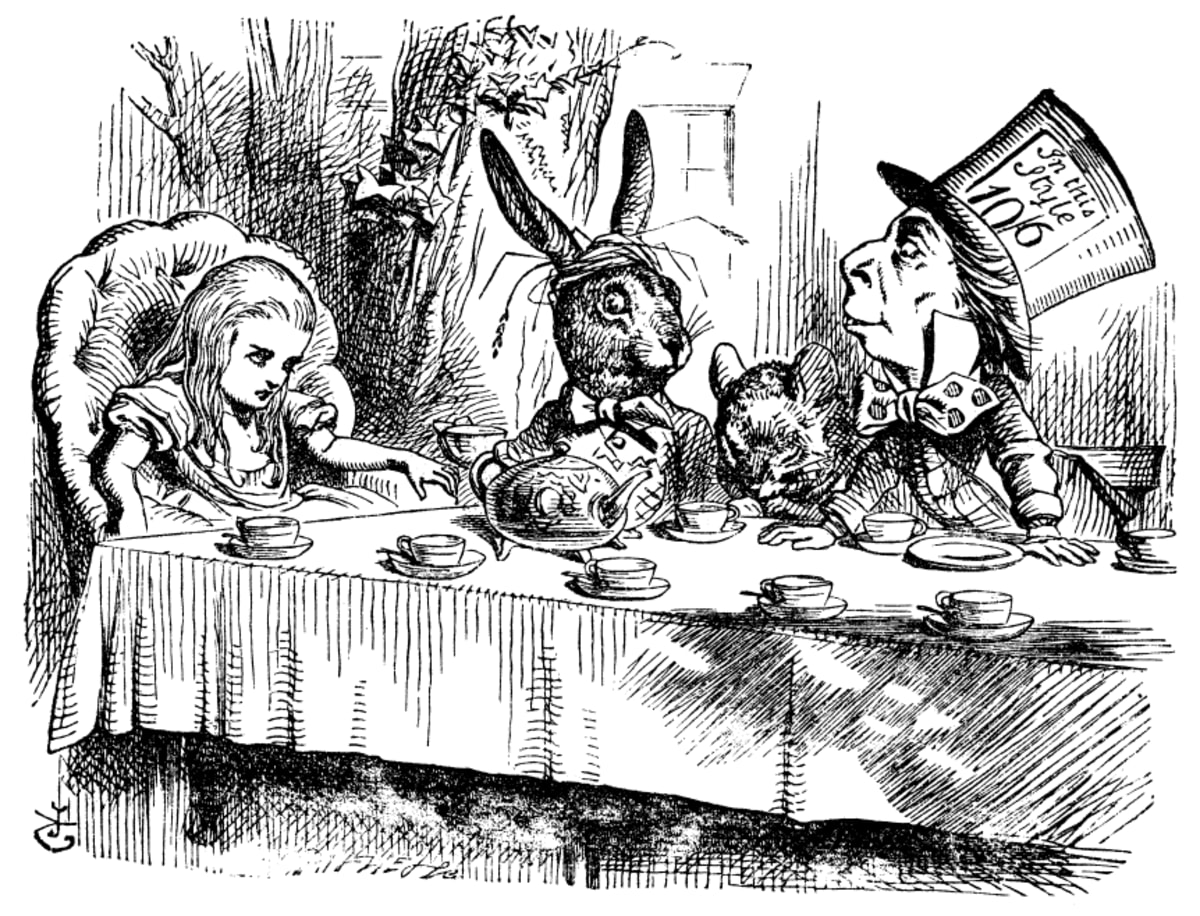
13. "Take some more tea," the March Hare said to Alice, very earnestly. "I've had nothing yet," Alice replied in an offended tone, "so I can't take more." "You mean you can't take less," said the Hatter: "it's very easy to take more than nothing."
Lewis Carroll, Alice's Adventures in Wonderland (1865).
The Mad Tea Party, and the most famous tea scene in English literature.
14. "The mere chink of cups and saucers tunes the mind to happy repose."
George Gissing, The Private Papers of Henry Ryecroft (1903).
Gissing also wrote that the hour of tea "marks the end of domestic work and worry, the beginning of restful, sociable evening." Underrated book. Lovely line.
15. "Tea, though ridiculed by those who are naturally of coarse nerves, or are become so from wine-drinking... will always be the favourite beverage of the intellectual."
Thomas De Quincey, Confessions of an English Opium-Eater (1821).
A little snobby. Also a little true.
16. "...a cupful of liquid that was almost, but not quite, entirely unlike tea."
Douglas Adams, The Hitchhiker's Guide to the Galaxy (1979).
What the spaceship's drink machine serves Arthur Dent every time he asks for tea. Every tea lover has had this cup at a hotel breakfast.
Tea Quotes From Poets and Playwrights
When tea arrived in England in the 1600s, poets and playwrights were some of its biggest fans and its biggest jokers.
17. "Here thou, great Anna! whom three realms obey, / Dost sometimes counsel take, and sometimes tea."
Alexander Pope, The Rape of the Lock (1714).
A joke about Queen Anne at Hampton Court. In Pope's day "tea" rhymed with "obey," which is why it works.
18. "...the cups, / That cheer but not inebriate, wait on each, / So let us welcome peaceful evening in."
William Cowper, The Task, Book IV (1785).
"The cups that cheer but not inebriate" became a stock phrase for tea all through the 1800s. The full passage, with the fire stirred and the curtains drawn, is the coziest description of an evening at home I know. It's basically my case for Blog: Inviting People Over for Tea: The Simplest Way to Create Community.
19. "Tea! thou soft, thou sober, sage, and venerable liquid, thou female tongue-running, smile-smoothing, heart-opening, wink-tipping cordial..."
Colley Cibber, The Lady's Last Stake (1707).
A stage character's over-the-top love letter to tea. "Smile-smoothing, heart-opening" is a pretty good description of a tea party.
20. "Should I, after tea and cakes and ices, / Have the strength to force the moment to its crisis?"
T.S. Eliot, "The Love Song of J. Alfred Prufrock" (1915).
Tea as the safe, polite thing you hide behind when you're too nervous to say what you mean.
Tea Quotes From Famous Tea Lovers

These writers and thinkers drank a lot of tea and said so.
21. "A hardened and shameless tea drinker, who for twenty years diluted his meals with only the infusion of the fascinating plant; who with tea amused the evening, with tea solaced the midnight, and with tea welcomed the morning."
Samuel Johnson, describing himself in a 1757 review in The Literary Magazine (as quoted in The Book of Tea).
He wrote it to defend tea from a critic who called it bad for the country. If tea solaces your midnight too, here are Blog: Can't Sleep? These Are the 10 Teas Worth Trying.
22. "Thank God for tea! What would the world do without tea? How did it exist? I am glad I was not born before tea."
Sydney Smith, English clergyman and wit, as recorded by his daughter Lady Holland in A Memoir of the Rev. Sydney Smith (1855).
The most joyful tea quote ever said out loud.
23. "Tea is one of the mainstays of civilization in this country."
George Orwell, "A Nice Cup of Tea," Evening Standard (1946).
The essay is a list of his 11 rules for the perfect cup, and he admits at least four of them are "acutely controversial." He takes his milk after the tea, for the record.
24. "Drink your tea slowly and reverently, as if it is the axis on which the world earth revolves."
Thich Nhat Hanh, The Miracle of Mindfulness (1975).
The Vietnamese Zen teacher often used a cup of tea to teach mindfulness. This is a great line to read before your first cup in the morning.
25. "There is something in the nature of tea that leads us into a world of quiet contemplation of life."
Lin Yutang, The Importance of Living (1937).
Lin wrote a whole chapter on tea and friendship, which might be the most on-brand thing I've ever read.
Short Tea Quotes for Captions

Need something short for a card, a mug, or an Instagram caption? These are the best short tea quotes from the list above:
- "Tea began as a medicine and grew into a beverage." (Okakura)
- "Meanwhile, let us have a sip of tea." (Okakura)
- "The second cup breaks my loneliness." (Lu Tong)
- "Ichi-go ichi-e." One time, one meeting.
- "Take some more tea." (Lewis Carroll)
- "The cups that cheer but not inebriate." (Cowper)
- "With tea welcomed the morning." (Samuel Johnson)
- "Thank God for tea!" (Sydney Smith)
Popular Tea Quotes With Shaky Sources

These show up on almost every tea quote list. I left them out of the 25 because I couldn't trace them to the person's own writing. Use them if you love them, but know the backstory.
"You can't get a cup of tea large enough or a book long enough to suit me." (C.S. Lewis)
It's everywhere, and it sounds exactly like him. But I couldn't trace it to any of his books, essays or letters. It may come from a friend's memory of something he said.
"Where there's tea there's hope." (Arthur Wing Pinero)
Usually credited to his 1888 play Sweet Lavender, but sources don't agree on the wording. Some print it as "While there is tea, there is hope."
"If you are cold, tea will warm you; if you are too heated, it will cool you..." (William Gladstone)
A lovely line that's usually pinned on the Victorian prime minister, but I couldn't find a speech or letter where he said it.
"Love and scandal are the best sweeteners of tea." (Henry Fielding)
Probably Fielding, but quote sites can't agree on whether it's from his 1728 play Love in Several Masques or his novel Tom Jones.
If you want to go deeper than quotes, the tea book I'd hand anyone is Blog: Tea: History, Terroirs, Varieties Review: The Best Tea Book I Own (and a Gorgeous Coffee Table Book). And if a line from Okakura hooked you, The Book of Tea takes about an evening to read. You can find the hardcover here.
Homework: pick one quote from this list, write it on a card, and leave it next to your kettle this week. Then invite someone over for the second cup.
Much love, Josh